

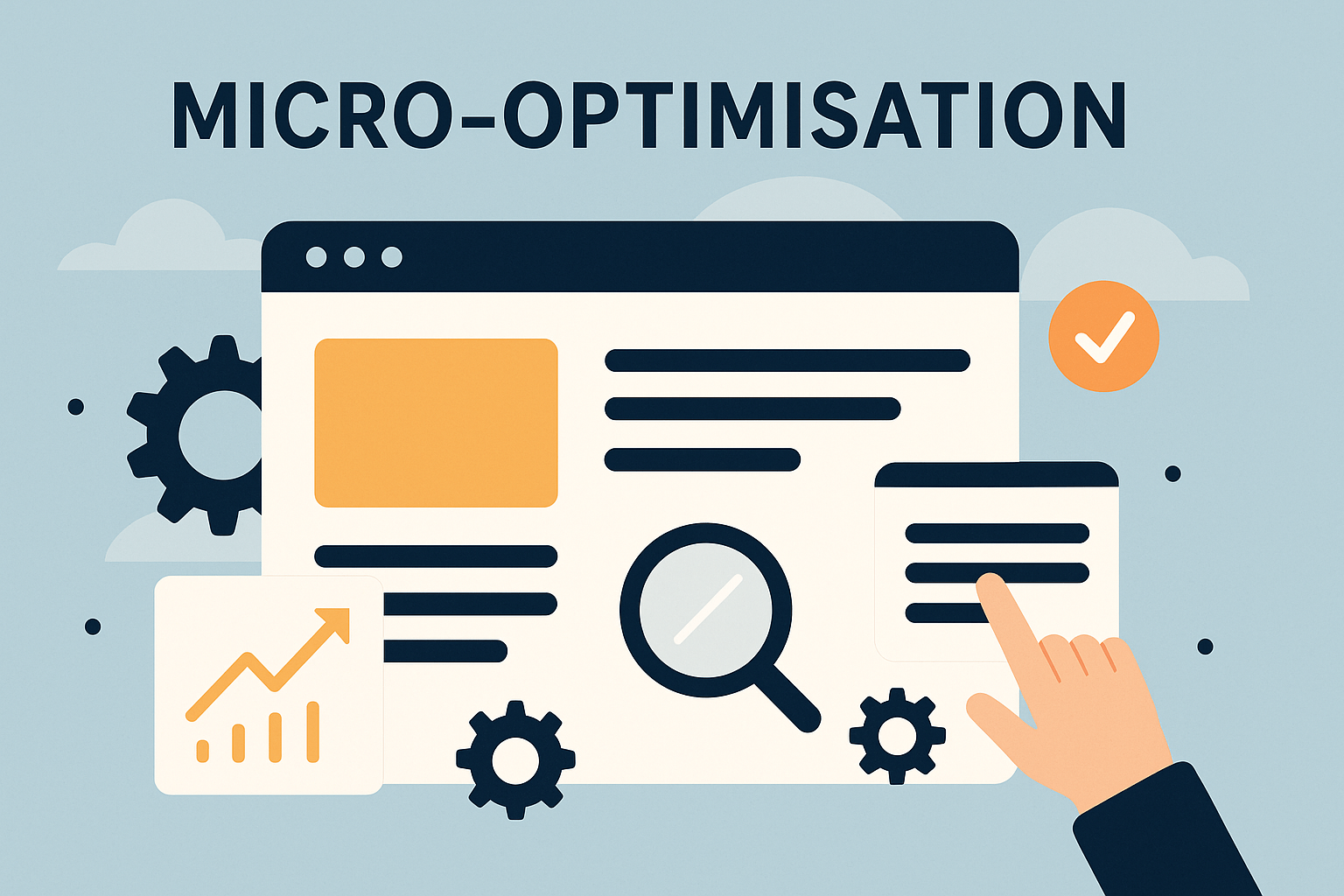
As the owner of Connect Dorset, I'm continually asked what separates a good website from a truly outstanding one. While cutting-edge design, reliable hosting and robust SEO certainly play pivotal roles, there’s a secret ingredient that often goes overlooked: micro-optimisation. These are the subtle, targeted enhancements that take your website’s performance, usability, and searchability to the next level. Today, I want to shine a light on micro-optimisation and why it should be front and centre in your digital strategy.
What Is Micro-Optimisation?
Micro-optimisation refers to making tiny, precise improvements throughout your website that cumulatively deliver a significant boost to its effectiveness. Unlike large overhauls or redesigns, these tweaks focus on the finer details — think image compression, button placements, code minification, title tag enhancements, micro-interaction improvements and more.
In our experience at Connect Dorset, the success and sustainability of a digital presence often hinge on these marginal gains.
Real-World Examples of Micro-Optimisation
Let’s explore how micro-optimisation works in practice:
1. Speeding Up Site Load Times
- Image Optimisation: By compressing images and using next-gen formats like WebP, even a highly visual site can load in a fraction of a second.
- Minifying CSS & JavaScript: Streamlined code reduces server load and increases responsiveness without losing functionality.
2. SEO Performance
- Schema Markup: Adding structured data helps search engines understand your content more clearly, boosting your chances of occupying rich results.
- Meta Data Precision: Tweaking meta titles and descriptions for clarity and relevance can subtly increase your click-through rates.
3. Improved Usability
- Button Placement: Adjusting the position or style of a call-to-action by just a few pixels can improve response rates significantly.
- Micro-Interactions: Smoother feedback for button clicks or form submissions offers a more engaging user experience.
4. Enhancing Security
- Up-to-date Plugins: Ensuring all WordPress or Shopify plugins are current might seem minor, but it noticeably reduces your vulnerability to attacks.
- HTTP Security Headers: Including or optimising headers can harden your website with minimal configuration.
Why Do Micro-Optimisations Matter?
Cumulatively, these changes make your website:
- Faster (and Google ranks fast sites higher)
- Easier to use (leading to better engagement and sales)
- More secure (protecting both your business and your customers)
- Favoured by search engines (thanks to semantic accuracy and technical compliance)
Perhaps more importantly, micro-optimisation elicits trust. Visitors notice a seamless, responsive, safe environment –– even if they don’t know how it’s achieved. This impression plays a crucial role in converting browsers into loyal customers.
How to Get Started with Micro-Optimisation
If you’re managing your own site, start with simple audits:
- Test your load speed with PageSpeed Insights
- Review your meta titles and descriptions
- Examine the flow of your booking system or checkout
If you’re hosted or designed by us at Connect Dorset, we routinely monitor and apply micro-optimisations as part of our ongoing commitment to your success. Our philosophy is that your digital platform should never stagnate –– small steps every month can keep your website at its peak.
Ready to Elevate Your Site, One Detail at a Time?
Don’t let the small stuff be an afterthought. At Connect Dorset, we’re passionate about harnessing the tiny technical and UX details that can deliver big results for your web project. If you’d like to discuss a tailor-made micro-optimisation action plan or simply want some tips on getting started, get in touch with us today –– let’s make your website the best it can be, together.
Written by the Connect Dorset team –– experts in web hosting, booking systems, web design, Shopify management, WordPress hosting, SEO optimisation and more.