

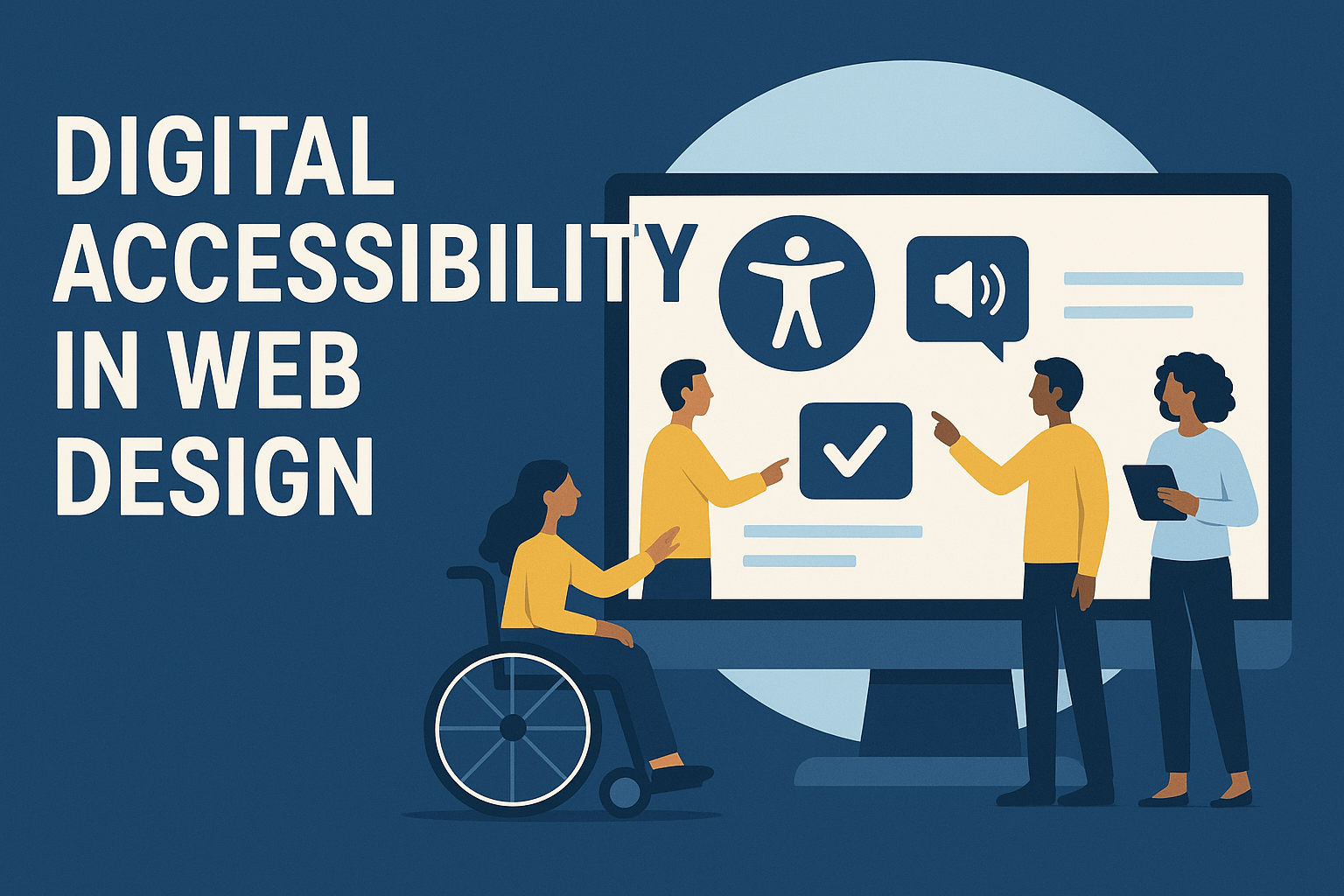
When people think of web design, they often picture sleek layouts, great copy, or mobile-friendly interfaces. However, there’s another aspect that’s quietly making a significant impact in the world of online business - accessibility. At Connect Dorset, I've come to realise that digital accessibility is not a box-ticking exercise or an afterthought. It’s an integral part of a successful online presence, delivering far-reaching benefits for both businesses and users.
In this post, I want to share why investing in accessible websites benefits your business and your customers, and how incorporating accessibility into your digital strategy can set you apart in an increasingly competitive online space.
What Is Digital Accessibility?
Digital accessibility means designing and building websites so that people with disabilities can perceive, understand, navigate, and interact with them effectively. This includes considerations for users with impaired vision, hearing, mobility, or cognitive skills. An accessible website ensures everyone, regardless of ability, has a positive experience.
Why Should Every Business Care About Accessibility?
1. Expanding Your Audience
One in five people in the UK has a disability. By not considering accessibility, you’re potentially excluding 20% of your market. And accessibility features - such as readable fonts, good colour contrast, or keyboard navigation - improve usability for every visitor, not just those with disabilities.
2. Legal and Ethical Reasons
Legislation like the Equality Act 2010 requires that web content is accessible to everyone. Failing to comply isn’t just a reputational risk - it could result in legal action. Ethically, prioritising accessibility underscores your commitment to fairness and inclusivity.
3. Improved SEO and Better Usability
Accessible websites are typically well-structured, with clear navigation and logical content flow. These qualities are also rewarded by search engines, helping your SEO efforts. Moreover, a user-friendly site reduces bounce rates and boosts engagement.
4. Building Your Brand’s Reputation
Organisations that go the extra mile to be inclusive are seen as leaders in their field. By providing an accessible digital experience, you show your community that your business genuinely cares. It’s the kind of value that fosters loyalty and positive word-of-mouth.
Accessibility in Practice: Where to Start
At Connect Dorset, we advocate for practical, incremental improvements that deliver value.
Some areas to focus on include:
- Alternative Text: Make sure all images have descriptions for screen readers.
- Keyboard Navigation: Ensure users can navigate your site without a mouse.
- Readable Content: Use clear structure, headings, and straightforward language.
- Colour Contrast: Text should be easy to read for those with impaired vision.
- Responsive Design: Your site should work across all devices and screen sizes.
Accessible design is not just about ticking off guidelines, but ensuring that real people can achieve what they need on your site, whatever their abilities or circumstances.
The Connect Dorset Approach
Our projects always start with your audience in mind. Accessibility features are built into every web design, WordPress site, Shopify storefront, or booking system we deliver. From our web hosting infrastructure to our SEO strategies, inclusivity is part of what we do, because it’s the right thing for both your business and your community.
Ready to Make Your Website Accessible?
Inclusive digital spaces benefit everyone. If you’re curious about making your website more accessible, whether you already have a site or are starting from scratch, let’s talk. At Connect Dorset, I’m always happy to help Dorset’s businesses make the web a better place for all.
Feel free to get in touch with us here and take your first step towards a more accessible and successful online presence.
Harnessing digital accessibility is not only a smart business move - it’s a reflection of the values our communities treasure most. Let’s build a digital Dorset where everyone is welcome.